

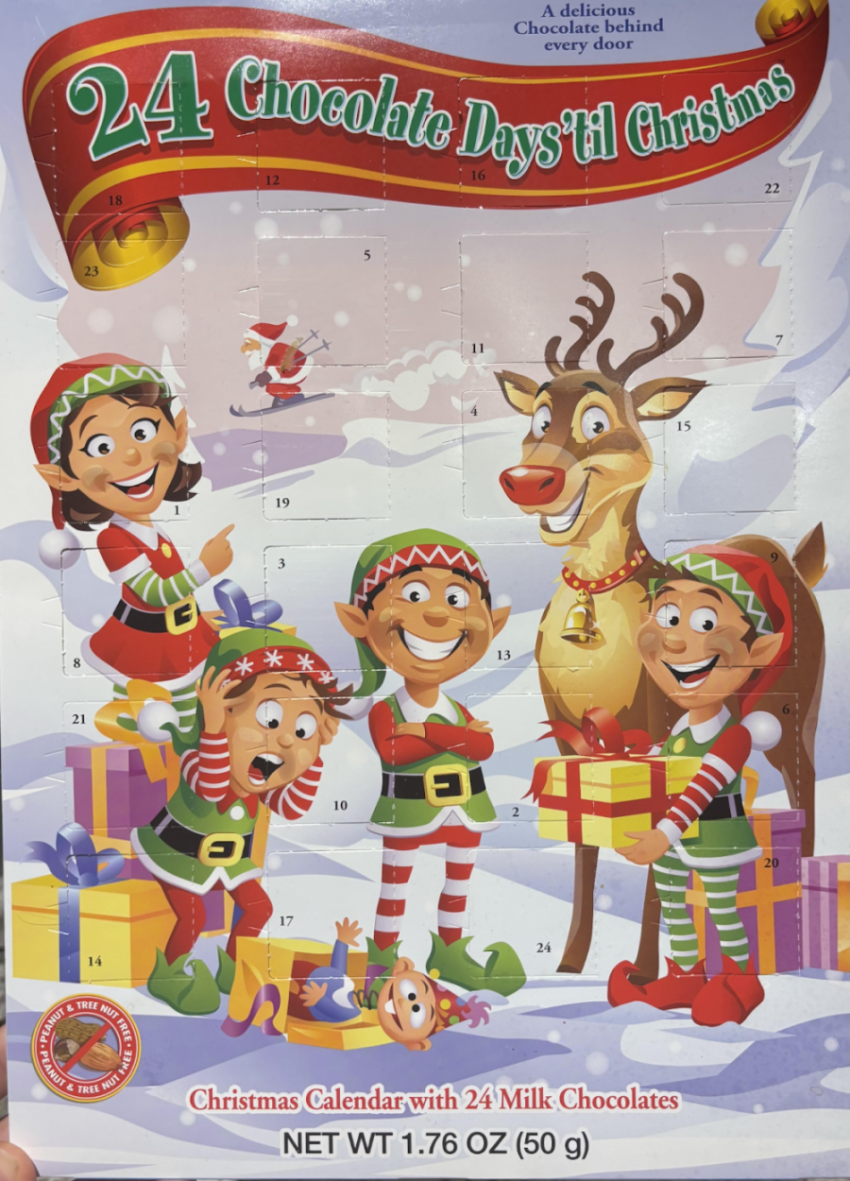
Advent calendars have become an exciting and enjoyable way to count down to Christmas in the United States. Originally filled with little bite-sized chocolates, they have expanded to a wide variety of miniature presents such as LEGO sets, small toys, or crafts. This change could be due to factors such as consumerism and how the 24-day structure can easily be adapted to many different products.
The term “advent calendar” originates from Adventskalender, which was a calendar used by the German Lutherans as devotional practice by counting the days up until Christmas. It would soon go on to spread to other various denominations and take other various themes to go along with it. The advent calendar first displayed a manger scene with saint Nicholas, winter weather, and famous icons such as Mary and Joseph. The structure started out simply as 24 thin flaps (to represent the 24 days before Christmas) that you would start to open on the start of advent, hence the name advent calendar.
After the 2nd world war Publishers such as the Sallmer publishing house got wind of the idea of an advent calendar who when once they received the license to them decided to release these “new” calendars where they would go on to become widestream throughout not only America but throughout the world. Recently companies such as LEGO and Squishmellow have made their own advent calendar and in the process making advent calendars even more popular in the process.
Overall, advent calendars have come from humble beginnings and throughout the years they have been adapted to be more appealing to the public. They have changed in many different ways whether it be what’s in them or the overall design of the calendar.