
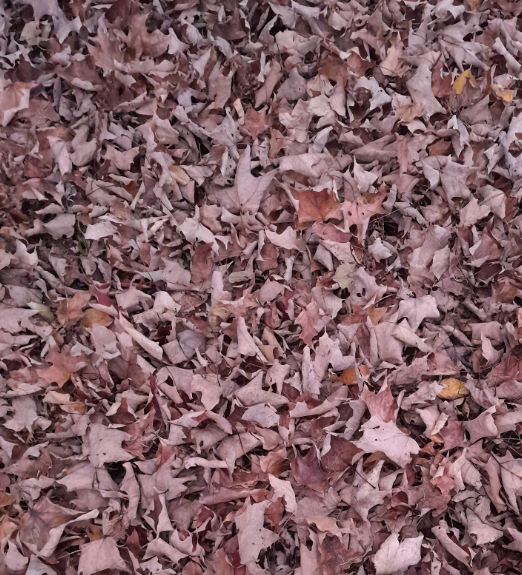
Fall is in full swing, and the leaves are falling. But what if you could help out the environment AND skip some yard work? The Leave the Leaves movement has been growing substantially in the past few years and benefits the soil, insects, and wildlife.
When you consider a natural habitat, leaves, branches, and dead stems do not get cleaned up and brought to the trash. Instead, they slowly decompose into the soil, returning the nutrients that they used to hold. In addition, the leaves provide a habitat for native bees, moths, butterflies, and fireflies [1]. Many of the species that use the leaves for habitat are struggling due to the lack of leaves available.
These leaves also help your yard. They form a free layer of mulch that suppresses weeds and slowly breaks down to fertilize the soil. The leaves are also a food source for microorganisms and insects that enrich the soil, such as worms and centipedes [2].
So what can you do? First, try to keep as many leaves as you can. Even if you have to move them, it is better to keep them in your yard. If you are concerned about leaving the leaves on your lawn, due to HOA rules or grass maintenance, use a blower or a rake to move the leaves into a flower bed or a designated compost pile. Be sure to move leaves on walkways or driveways, since wet leaves can pose a safety hazard [3].
Depending on the number and size of the trees in your yard, you may have enough leaves left over after covering your flower beds to create leaf mulch. Place the leaves in a place where they won’t blow away, water them, and leave them until the spring. This provides a great habitat for wildlife over the winter, and will leave you with a nutrient-rich leaf compost for your garden in the spring.
Instead of cutting down dead flowers and stems, leave the whole plant until springtime or leave 18-24” above the base of the plant. This is because many bugs, including key pollinator species like carpenter bees, leaf-cutter bees, and some kinds of stem-boring moths [4], benefit from hollow stems and stalks that are left over winter.
There are many low-effort methods you can utilize to benefit the health of your yard and the health of local insects. From leaving a layer of leaves on your flower beds, composting leaves instead of hauling them away, and leaving hollow flower stems, it only takes a few minutes to give a helping hand to our gardens and buggy neighbors.